
New or old, a major works conversation is coming for the body corporate — if it isn't already on the agenda. Waterproofing, render, balustrades, fire systems, lifts, façades. The work is not optional. The decisions around it almost always are. And the order in which a body corporate committee makes them decides whether the project lands inside budget, on time, with owners still talking to each other — or stalls in disputes, blown estimates, and a second special contribution nobody saw coming.
Most committees come at major works in the wrong order. They start with the quote. The quote starts with the consultant. The consultant was chosen because someone on the committee knew them, or because the body corporate manager forwarded a name. By the time the figure lands at the bottom of the page, three earlier decisions have already shaped it — and most of them weren't really decisions at all.
New or old, a major works conversation is coming for the body corporate — if it isn't already on the agenda. Waterproofing, render, balustrades, fire systems, lifts, façades. The work is not optional. The decisions around it almost always are. And the order in which a body corporate committee makes them decides whether the project lands inside budget, on time, with owners still talking to each other — or stalls in disputes, blown estimates, and a second special contribution nobody saw coming.
Most committees come at major works in the wrong order. They start with the quote. The quote starts with the consultant. The consultant was chosen because someone on the committee knew them, or because the body corporate manager forwarded a name. By the time the figure lands at the bottom of the page, three earlier decisions have already shaped it — and most of them weren't really decisions at all.
This keynote is about those three decisions. The ones that should be made first, deliberately, with the committee's eyes open.
DECISION 01
The consultant who diagnoses the problem is, more often than not, the same firm that designs the fix, writes the contractor brief, and supervises the work. There is no independent check on the scope. There is no independent check on the methodology. There is no independent check on the price.
That arrangement isn't necessarily malicious. But it is a structural conflict of interest, and it sits at the heart of why so many body corporate committees end up paying significantly more than they should for remediation work.
The person telling you what is wrong should not be the same person telling you how much it will cost to fix.
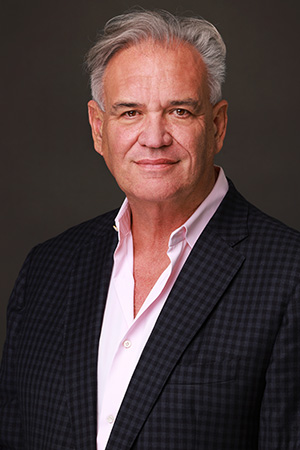
Michael will walk through the separation-of-powers principle as it applies to body corporate remediation — what each role in the chain is actually for, who should hold which role, and the specific questions a committee should ask before signing off on a consultant's engagement letter. The point is not to mistrust your consultant. It is to structure the engagement so that trust is not the only thing standing between your body corporate and a six-figure overrun.
DECISION 02
A technically perfect remediation plan will fail at the general meeting if the room isn't with you. This is the part of major works that most committees underestimate. The legal threshold for a special contribution is one number; the practical threshold — the one that gets you a quorum, a clean vote, and owners who won't litigate after the fact — is another entirely.
Owners in larger schemes are not a single audience. Resident owners, investors, offshore owners, owners who bought last year and owners who bought twenty years ago all read the same notice paper differently. The committee that wins the room is the committee that has thought about each of those audiences before the agenda goes out, not after.
Expect practical material here: how to sequence the communication, how to handle the objector who turns up at every meeting, or worse, doesn’t turn up at all, how to present the sinking fund forecast in a way that owners actually engage with, and the role the on-site building manager plays in keeping resident sentiment from turning against the project mid-stream.
DECISION 03
The funding conversation usually arrives last and gets hot. By the time owners are looking at a special contribution figure, the room is already tired, the contractor is already half-engaged, and the committee is in defensive mode. This is the wrong order.
The funding decision should be made early, modelled properly, and communicated alongside the diagnosis — not bolted on at the end. Committees have four live mechanisms to work with: routine levies, special contributions, the sinking fund forecast under the BCCM Act and strata loans. Each one carries a different message to owners. Each one carries different cash-flow implications. The choice between them is not a finance question alone; it is a governance question.
Michael will cover the funding mechanics specific to Queensland schemes, including how the sinking fund forecast should actually inform major works planning rather than sit in a drawer, and where the gap between the forecast and the real cost of a remediation typically opens up.
The three decisions don't scale down. A small townhouse complex getting its waterproofing done properly faces the same consultant conflict, the same owner engagement problem, and the same funding conversation as a high-rise tower planning a multi-year façade program. What differs is the number of zeros on the special contribution — not the shape of the problem, and not the order of the decisions that determine whether you get it right.
What is also common across every scheme size is a body corporate manager carrying a portfolio too wide to give any one scheme the specialist attention major works actually require. That is not a criticism of the individual manager — it is the structural reality of how the industry has been built. Major works sit at the intersection of construction, contract law, governance, finance, and resident communication. Asking one generalist body corporate manager to be expert in all five at once is not realistic at any scheme size. The research is clear on this: it is the single largest driver of service failures in the industry.
The Strata Professionals Group was built around a specialist staffing model precisely to close this gap. A senior strata manager holds your scheme's relationship; specialist practitioners in governance, compliance, finance, and maintenance step in when the scheme needs them. Whether your project is a single roof replacement or a multi-year façade program, the structural difference is worth understanding — and this keynote is the starting conversation.
Michael is founder and chair of The Strata Professionals, a national franchise of strata management firms built on methods and procedures drawn from his 40 years in strata as a manager, researcher, and lawyer. His weekly newsletter, The Strata Professional, is read widely and advances his agenda for reforming and innovating strata management practice. Alongside his law degree, Michael holds a Master of Philosophy in Built Environment focused on mixed-use developments, and he's about to begin a doctorate at Oxford. His thesis, Towering Tragedies, explores how laws impact the quality of decision-making in buildings at risk of catastrophic failure from un-remedied defects.
FREE EVENT · LIMITED PLACES · TICKETS ESSENTIAL
DATE: Wednesday 19 August 2026 TIME: 4:00 PM – 6:00 PM
VENUE: Harcourts Local - Nundah, 31 Station Street, Nundah COST: Free
The keynote will be followed by a Q&A session. Afterwards, join us for drinks and canapés.
Presented by The Strata Professionals
Enquiries: admin@thestrata.com.au · thestrata.com.au
Members of body corporate committees in Queensland schemes considering or already engaged in major works. On-site building managers and caretakers responsible for the day-to-day care of larger schemes are also welcome. Lot owners curious about how major works decisions are made in their scheme are also welcome to attend.
Yes. The content is framed around the Body Corporate and Community Management Act 1997 and the sinking fund and contribution mechanics that apply to Queensland schemes. We use Queensland terminology throughout — body corporate, lot owner, sinking fund, contributions.
For the purposes of this keynote: any project that alters the structure, waterproofing, fire compliance, or façade of common property, and any program of repairs significant enough to require a special contribution or a draw from the sinking fund. Typical examples include concrete spalling and rectification, balustrade replacement, lift modernisation, waterproofing remediation, render and painting, fire safety upgrades, and retrofitting sustainability infrastructure.
No. Anyone with a stake in how their building handles major works is welcome — committee members, building managers, lot owners, prospective owners, and industry professionals.
Yes. The format is a keynote followed by an open Q&A. Michael and his Queensland based body corporate management team stays back afterwards to talk one-on-one with anyone whose situation he didn't get to during the session.