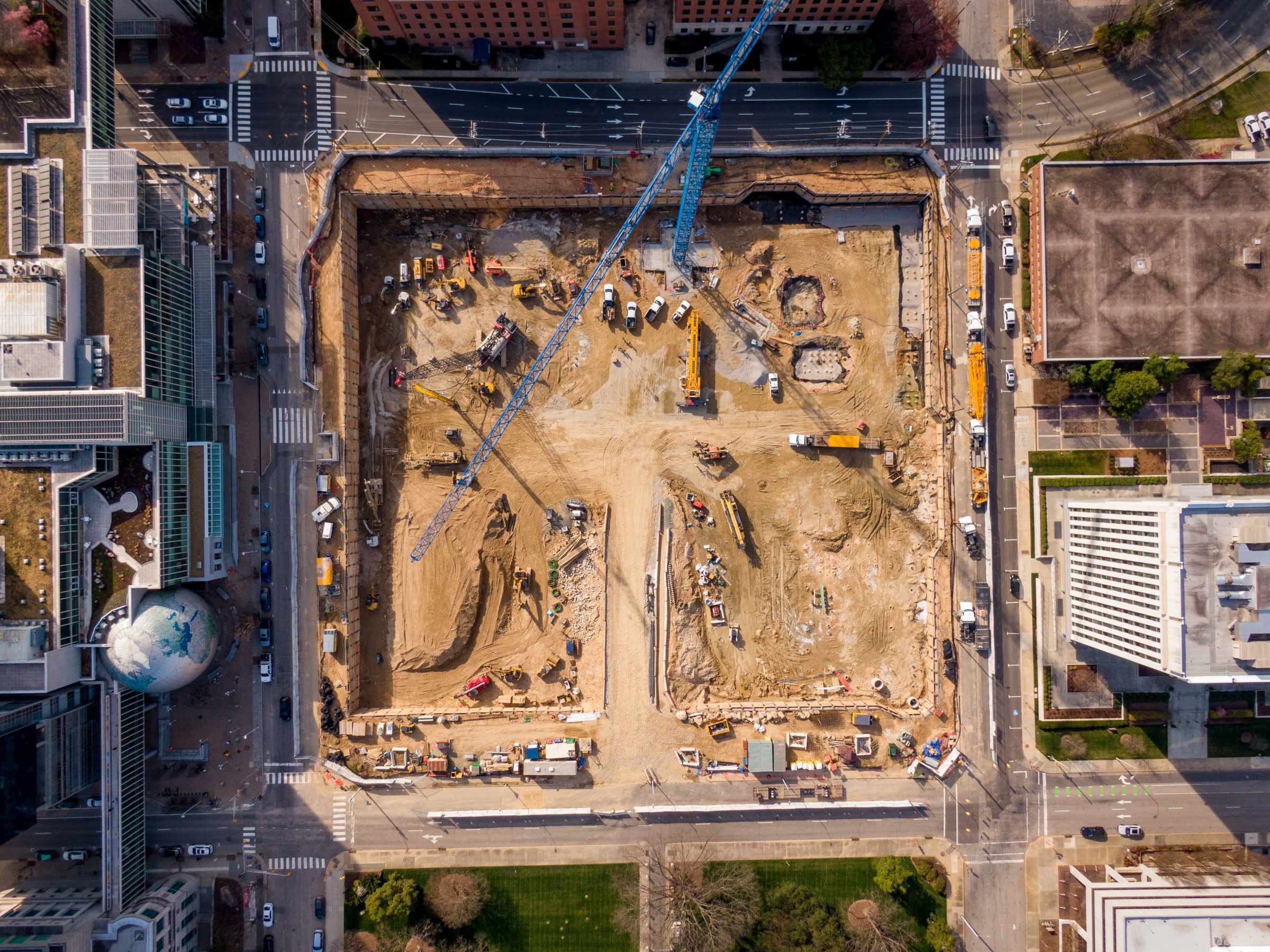
The Hole Next Door: What Brooklyn Teaches Strata Owners About Excavation
Eight died when a Brooklyn building fell into the excavation next door. Here's how strata owners can protect themselves.
As a researcher studying how people make decisions about buildings with known safety risks, I find it hard not to be alarmed by recent events. Last week I wrote about Wang Fuk Court in Hong Kong, where 168 people died in a fire during building remediation.
Read: 168 Dead After 46 Complaints Mishandled: What Australian Strata can Learn from Wang Fuk Court
Sadly, this week there are two more cases to study. In Brooklyn, eight people died when a small apartment building collapsed. In Washington DC, a condo owner locked in a long dispute over mould shot dead his building manager, wounded four others and then took his own life. Is murder-suicide in strata a known risk? I'm beginning to get worried. For now, let's focus on Brooklyn.
What happened in Brooklyn?
What happened in Brooklyn began shortly after 4pm on 11 November, when a three-storey building at 1321 Flatbush Avenue collapsed into an excavation on the lot next door. Built in 1930, it had four apartments above a shop. Eight people died, including two children and two construction workers. Eighteen were injured.
The warning signs were on file. A March survey recorded cracks in the wall facing the construction lot and rated it in poor condition. Inspectors stopped work next door for failing to protect neighbours, then fined the contractor US$10,000 for ignoring the order. The excavation plans called for bracing and monitoring of nearby buildings. Whether any of that happened is now the question investigators must answer.
Could it happen here?
A Brooklyn-style failure could happen here, and in slower form it already has. Mascot Towers in Sydney was evacuated in 2019 after cracking appeared in its structure. Engineers engaged for the owners pointed to excavation and dewatering for the development next door, a link the developer has denied. In Melbourne, owners in Maidstone are living with a building that is sinking, although no cause has been reported.
Read: Is Maidstone Melbourne's Mascot?
What does the law let neighbours do?
What the law lets neighbours do depends on your state. Victoria has a protection work regime under Part 7 of the Building Act 1993. If the building surveyor decides your property is at risk, the developer must serve a protection work notice detailing the work before it starts. You have 14 days to respond, and silence counts as agreement.
NSW has no equivalent. Section 74 of the Environmental Planning and Assessment Regulation 2021 makes the excavating owner protect and support your building at their cost, with seven days' notice. Section 177 of the Conveyancing Act 1919 lets you sue if your building loses support. Most of this is enforced by regulators or takes effect after damage occurs.
Read: From Mascot Towers to Mandatory Compliance
What should you do when a DA is lodged next door?
When a DA is lodged next door, you should lodge a submission, because conditions are much harder to add after consent. Ask for a geotechnical report covering your building, a monitoring plan with trigger levels, a pre-start dilapidation report and shoring designed for your foundations. Ground anchors under your land need your consent, so negotiate a proper deed. Managers should flag the DA to the committee the week it is lodged.
What records should you keep?
The records you should keep start with the ones a well-run building already has. A current capital works fund plan, maintenance schedule and repair invoices show the building's condition before the excavator arrived. Add dated photos of the same fixed points: boundary walls, basement walls, retaining walls, paths and stairwells. Put a tape measure beside every crack. Once the site is fenced, walk the building every week or two, and after any heavy digging. Check the developer's dilapidation report against your own and dispute errors in writing.
Read: The Band-Aid Approach: Australia's Strata Maintenance Crisis
When should you raise the alarm?
You should raise the alarm the day something changes. Are there new or widening cracks, or sticking doors, or water in the basement? Record it, compare it with your baseline, and report it in writing. In NSW, tell council or the principal certifier, Building Commission NSW and SafeWork NSW. In Victoria, tell the Building and Plumbing Commission and WorkSafe. Tell your insurer. If cracking is sudden or fast, evacuate and call 000. Brooklyn had a file full of warnings. Make sure yours gets read.